How to Choose a Shopify Website Designer for Your CPG Brand
Last updated:
October 25, 2026
•
12
mins read

You’ve spent months (maybe even years) developing your product, obsessing over the ingredients, finding the right co-manufacturer, refining your packaging, building your brand in public, yapping about your product to every stranger who will listen…
And phew, it’s a lot of work!
Now that it’s time to finally bring your product to market, you need to find the right Shopify designer to partner up with.
As a Shopify website designer and developer who has worked with over 20+ CPG brands in food and bev this year alone, I’m here to guide you in the right direction!
1. Look for a Shopify designer who understands the CPG world
Not all website designers specialize in the same things.
Some designers primarily work with service providers. Others specialize in personal brands or corporate websites or event spaces.
And while a talented designer can work across various industries, there’s a huge difference between designing a website that encourages someone to book a discovery call and one that gets your people to add a $12 jar of chili crisp to their cart.
CPG websites have their own unique challenges.
Your customers can’t taste your product, smell it, feel the packaging, or pick it up on a shelf.
So your website has to bridge that gap.
That means helping your customers understand what makes your product special, what problem it’s solving, what is taste or feels like, how they can use it, and why they should choose your brand over the dozens of alternative options available to them.
A Shopify designed who understands the CPG space (hi, it’s me!) thinks about things like:
- Product education: How can you clearly communicate the ingredients, benefits, flavors, or use cases in a way that a 10-year-old could understand?
- Purchase confidence: What information does someone need in order to feel confident buying a product they have never tried?
- Repeat purchases: How can we make it easy for customers to come back, reorder, or subscribe?
- Product discovery: How can we help shoppers explore different flavors or try out a product bundle?
- Brand differentiation: How can we make the shopping experience feel distinctly yours?
You don't need a designer who has worked in your exact product category, but you need want to look for someone who gets the CPG world and is able to approach your website with strategy-first.
2. Stalk their portfolio and browse through their client websites
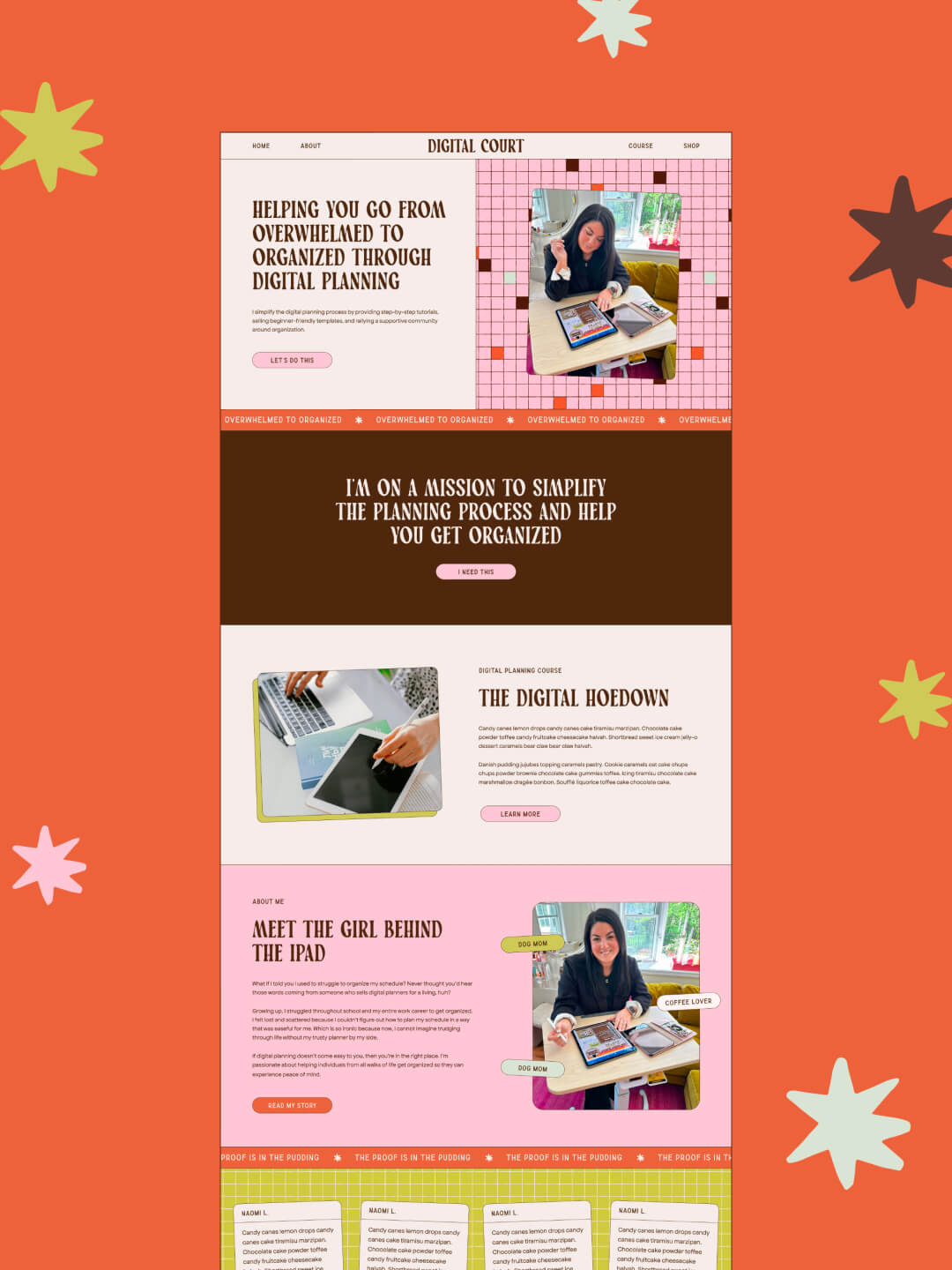
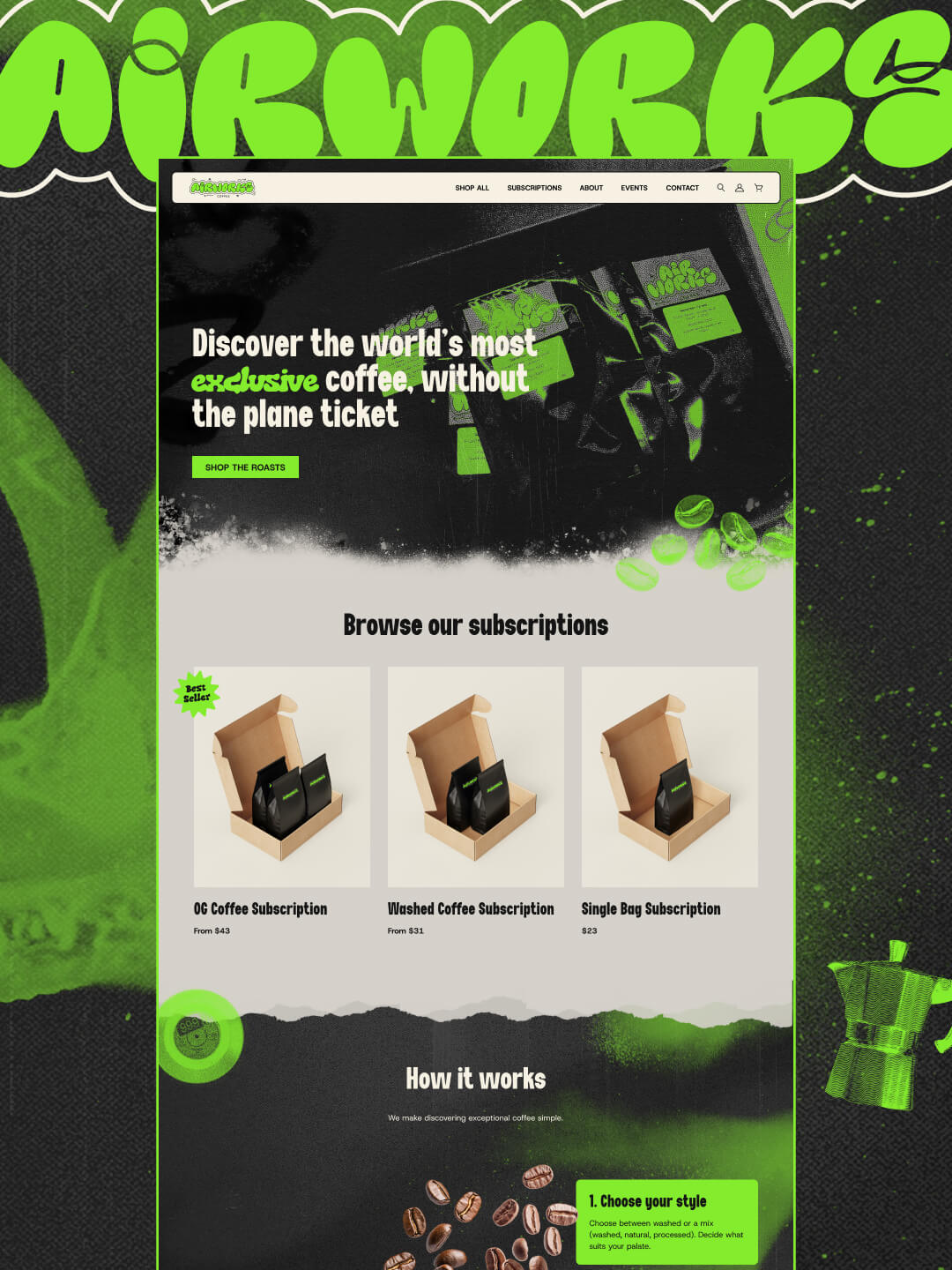
Make sure you feel aligned with your designer’s work by looking through their portfolio (this is mine!).
Bonus points if they have case studies you can read through instead of just mockups of beautiful work with no context.
But don’t just make decisions on aesthetics alone! I always recommend taking a closer look at past websites they have worked on and pretend like you’re a first-time customer.
Ask yourself:
- Can I understand what this brand sells within a few seconds?
- Is it easy to navigate between products and collections?
- Can I quickly find the information I need about ingredients, product benefits, shipping, etc?
- Does this website work well on my phone?
- Is it straightforward adding products to cart?
- Does the design feel memorable or does it look like every other Shopify store?
The money is in the product pages, so pay extra attention to these!
Your product page is where the sell happens, and a good Shopify designer should know how to balance beautiful visuals with information that helps people make confident purchasing decisions.
If you’re still on the fence or having a hard time choosing between several designers, don’t be afraid to ask the designer about the strategy and thinking behind their work.
And as a designer myself, I do have to throw in a disclaimer: someone clients do massively change up a website post-launch so looking at case studies or seeing when a website was originally built is extra helpful for context!
3. Make sure they understand how to design for conversions
You’ll probably hear these phrases being thrown around when researching Shopify designers: CRO, AOV, CVR, LTV, and CAC.
And while this blog isn’t about the best practices when designing for conversions, I’ll quickly break it down for you:
- CRO = Conversion Rate Optimization
This is improving your website’s performance so you can turn more visitors into customers. - AOV = Average Order Value
How much a customer spends per order, on average. - CVR = Conversion Rate
The percentage of people who complete a purchase after visiting your website. - LTV = Customer Lifetime Value
How much revenue a customer generates throughout their relationship with your brand. - CAC = Customer Acquisition Cost
How much it costs to acquire a new customer.
Knowing the vocabulary is the easy part. What you actually want is a designer who knows how to make it easier for the right people to buy from you.
For a CPG brand (hi, that’s you!), that could look like:
- Building your website strategy before anyone touches design
- Making your add-to-cart button easy to find
- Placing customer reviews near important purchasing decisions (like below the “buy now” button)
- Pulling out your key selling points so your messaging feels clearer and more trustworthy
- Making shipping info quick to access
- Highlighting subscriptions for products customers regularly restock
One thing to keep in mind: designing for e-comm doesn’t mean cramming every sales tactic onto your site or adding so much copy that your product page reads like an essay. The good stuff gets added strategically, in bite-sized pieces.
Too many pop-ups, countdown timers, competing offers, and distracting elements make shopping feel overwhelming, which can actually bring your conversion rate down.
The goal isn’t to pressure your customers into buying, but to remove unnecessary friction, answer their burning questions, make the purchase decision feel easier.
4. Find someone who can bring your brand world to life
Here's where things get FUN!
One of the biggest opportunities for emerging CPG brands is creating a shopping experience that feels like an extension of the brand itself.
Think of your favorite food, beverage, or lifestyle brands. (The ones that come to mind for me personally, are Graza, Ghia, Brahmi, etc).
Chances are, the brands you remember have a distinct personality (and a FUN website).
Working with a talented Shopify designer is one way to build a shopping experience that is not only seamless, but feels distinct to your brand.
This goes beyond plugging your logos, fonts, and colors into a generic Shopify theme, but working with a designer who can translate your brand’s story onto your digital home.
Whatever makes your brand special, your website should reflect it.
5. Ask about their Shopify development experience
There are a TON of ways to build a store in Shopify.
Some designers will have you buy a premium theme and customize it from there, designing closely to the theme’s layout. Others will design everything in Figma first then build it in Shopify afterward.
As a Shopify developer, I’ve walked into some nightmarish scenarios. One client’s previous developer built their site in Webflow and then converted it into a Shopify theme, and the result was NOT editable at all for my client. Another had bought a theme off Etsy (please don’t buy a theme from anywhere outside the Shopify Theme Store!) and was stuck on an outdated version they couldn’t update themselves.
It’s hard to tell whether a Shopify site is built properly on the backend just by scrolling through the live site. That’s why you’ll want to confirm that your designer is either a developer themselves or has a strong developer they partner with.
Personally, I design every client’s website in Figma first and then build it on Shopify’s Horizon theme, unless the client already has a premium theme they love and want to keep. Because I have development skills, I can bring almost any design to life on Shopify regardless of the theme (with the best user experience in mind, of course!).
Here are a few questions worth asking when you’re chatting with a designer:
- Will my website be built using a Shopify theme or developed entirely from scratch?
For emerging CPG brands, customizing an existing Shopify theme is the way to go! You absolutely do NOT need a custom-coded website to create a distinct shopping experience, because a site can feel completely custom without being coded from scratch.
- Will I be able to make updates myself?
Your product lineup, promotions, photography, and messaging will probably evolve as your business grows. You shouldn’t have to contact your designer every time you want to swap a homepage image or update a featured collection.
During the handoff phase, I always do a live training call with my clients to show them around their new website and give them space to ask questions.
And just because the site is launched doesn’t mean I disappear! I’m in it for a long-term partnership, so I’m still around for ongoing optimization, and for clients who’d rather hand off the updates entirely, I’m happy to take those on too. - Can you help integrate the tools my business needs?
Depending on your business model, you might need integrations for email marketing, subscriptions, product reviews, bundles, wholesale ordering, or loyalty programs. Make sure your designer understands which tools you already use and how they’ll all work together.
- How do you approach mobile design, performance, and accessibility?
Your website should be easy to navigate on any device, load quickly, and be usable by as many customers as possible. If you’re planning to scale, these foundational details matter even more.
6. Understand their process before you commit
The experience is just as important as the outcome!
Some designers run a highly collaborative process with regular check-ins and plenty of chances to give feedback. Others take a more hands-off approach, where you hand over your information upfront and receive a finished design a few weeks later. Neither is automatically wrong, but you’ll want a process that fits how you like to work.
Before hiring someone, ask:
- What happens before the design phase begins?
- Will we talk through my business goals, target customers, and brand positioning?
- At what stages will I get to review the design?
- How many rounds of revisions are included?
- What do I need to provide before the project starts?
- What happens after the website launches?
Personally, I kick off every Shopify design project with a website strategy call. It typically runs 90 to 120 minutes, and we chat through your brand, your customers, and what makes your products stand out, so every design decision has a reason behind it. I also design the homepage first, so we can align on the creative direction before moving on to the rest of the site.
My studio’s approach is collaborative from start to finish because I want to make sure your vision never gets lost along the way. If you’d like to see how it all comes together, feel free to reach out or stalk my services page!
7. Don’t choose a designer based on price alone
Let’s talk about the elephant in the room: budget.
Shopify website prices varies a lot depending on the designer’s experience, the project’s complexity, and what’s included.
Depending on where you are looking, you might come across cheap theme setup services, mid-range theme customization packages, and fully custom e-commerce projects with much larger price tags. What matters most is understanding what you’re paying for.
For example, does the quote include:
- Website strategy and planning?
- Custom page design?
- Shopify theme setup and development?
- Product and collection page templates?
- Mobile optimization?
- Basic SEO setup?
- App integrations?
- Training and post-launch support?
Two designers might quote completely different prices for what sounds like the same project, because the scope and level of customization behind each quote can look very different. It’s tempting to go with the cheapest option, but your website is a big part of your sales infrastructure, so it’s worth looking past the number.
That doesn’t mean you need to spend a fortune before you’ve even validated your product! If you’re still testing your idea, a simple, thoughtfully set-up Shopify store might be exactly what you need.
If you’ve already invested in branding, packaging, photography, and product development, a more customized website that brings all of those pieces together is usually worth the investment, since your site is often the first place customers experience everything you’ve built.
8. Look for a creative partner who’ll push back
Last but certainly not least, pay attention to how a potential Shopify designer approaches your project:
- Do they ask thoughtful questions about your business?
- Are they curious about your customers?
- Do they challenge your ideas when there’s a strategic reason to try another approach, or do they simply agree with everything you suggest?
Now, don’t get me wrong, your creative vision absolutely matters! You’re also hiring someone for their expertise, though, so a great website designer should be able to explain their recommendations, offer fresh perspectives, and help you make decisions that support your goals.
That might mean suggesting a different homepage structure, dialing back the animations, or telling you that the feature you’ve been eyeing probably isn’t the best use of your budget right now.
You want someone who cares about how your website performs just as much as how it looks.
So, how do you know you’ve found the right Shopify website designer?
The best Shopify website designer for your CPG brand won’t always be the person with the biggest Instagram following or the flashiest portfolio. Look for someone who understands what makes your brand different, knows how to turn that into an online shopping experience that sells, and has the technical skills to actually build it.
They’ll balance creativity with strategy, and they’ll understand that when someone buys your product, they’re deciding whether your brand deserves a spot in their everyday life. The right designer will also make bringing your big ideas to life feel collaborative and exciting (and maybe even a little fun!).
You’ve already put so much thought into creating a product worth buying, so your website should give people just as many reasons to fall in love with it.
Looking for a Shopify website designer for your CPG brand?
Hey, I’m Olivia, the founder and lead designer behind Zig Zag Creative! I design and develop custom Shopify websites for CPG brands in their growth era, whether you’re getting ready to launch, ramping up DTC sales, or prepping to pitch to retailers. Every project starts with strategy and ends with a website that’s fun to browse and makes add-to-cart the obvious next step.
If your product is anything but boring, your website shouldn’t be either. I’d love to hear what you’re dreaming up!

Hi, I'm Olivia!
I'm the brand and website designer behind Zig Zag Creative, building playful and immersive visual worlds for creative service providers and emerging CPG brands. Less “official” titles include full-blown data nerd, color enthusiast, and big snack girlie.
Intersted in working together?